Solo bikepacking is one of the most rewarding ways to travel. You set your own pace, choose your own stops, and experience the kind of deep quiet that only comes from being alone in the landscape. But riding solo also means that when something goes wrong, you are the only one there to handle it. No riding partner to flag down help, share a spare tube, or help lift your bike over a downed tree.
That does not mean solo bikepacking is dangerous.
It means you need to be more deliberate about preparation, communication, and decision-making. Here is how to ride alone confidently.
Tell Someone Your Plan
Before you leave, give a trusted person your complete itinerary. Include your planned route, expected campsites, and estimated arrival times at key points. Tell them what time to worry if they have not heard from you. This simple step means that if you go silent, someone knows roughly where to send help.
Update your contact person whenever your plans change.
If you decide to take a different route or add a rest day, a quick text keeps the information current. The worst outcome is a rescue team searching the wrong trail because your contact had outdated information.
Carry a Communication Device
Your phone works in town and along some highways, but cell service disappears fast on remote gravel roads and singletrack. A satellite messenger like the Garmin inReach Mini or ZOLEO gives you the ability to send texts and share your GPS location from anywhere on the planet.
The SOS function on these devices contacts search and rescue directly via satellite.
It works where phones do not, and it works when you are injured and cannot make a voice call. The monthly subscription cost is easy to justify when you consider the alternative of lying beside a trail with a broken collarbone and no way to call anyone.
Set up automatic location sharing so your contact person can track your progress without you needing to remember to check in. Most satellite messengers can send a breadcrumb trail at intervals you choose, from every 10 minutes to every few hours.
Plan Your Route Carefully
Solo routes should lean toward the conservative side, especially in unfamiliar territory. Avoid the most technical or remote options unless you have experience and the right gear. A mechanical failure 50 miles from the nearest road is manageable with a partner. Alone, it can turn into a very long walk.
Study your route in advance using satellite imagery and elevation profiles. Know where the water sources are, where resupply options exist, and where you can bail out to a paved road if needed.
Having multiple exit points along a route gives you options if conditions change or your body tells you to stop.
Check recent trail reports and weather forecasts. A river crossing that is ankle-deep in summer might be waist-deep in spring. A ridge that is pleasant in calm weather becomes dangerous in a thunderstorm. Current information prevents unpleasant surprises.
Campsite Selection
Where you camp matters more when you are alone.
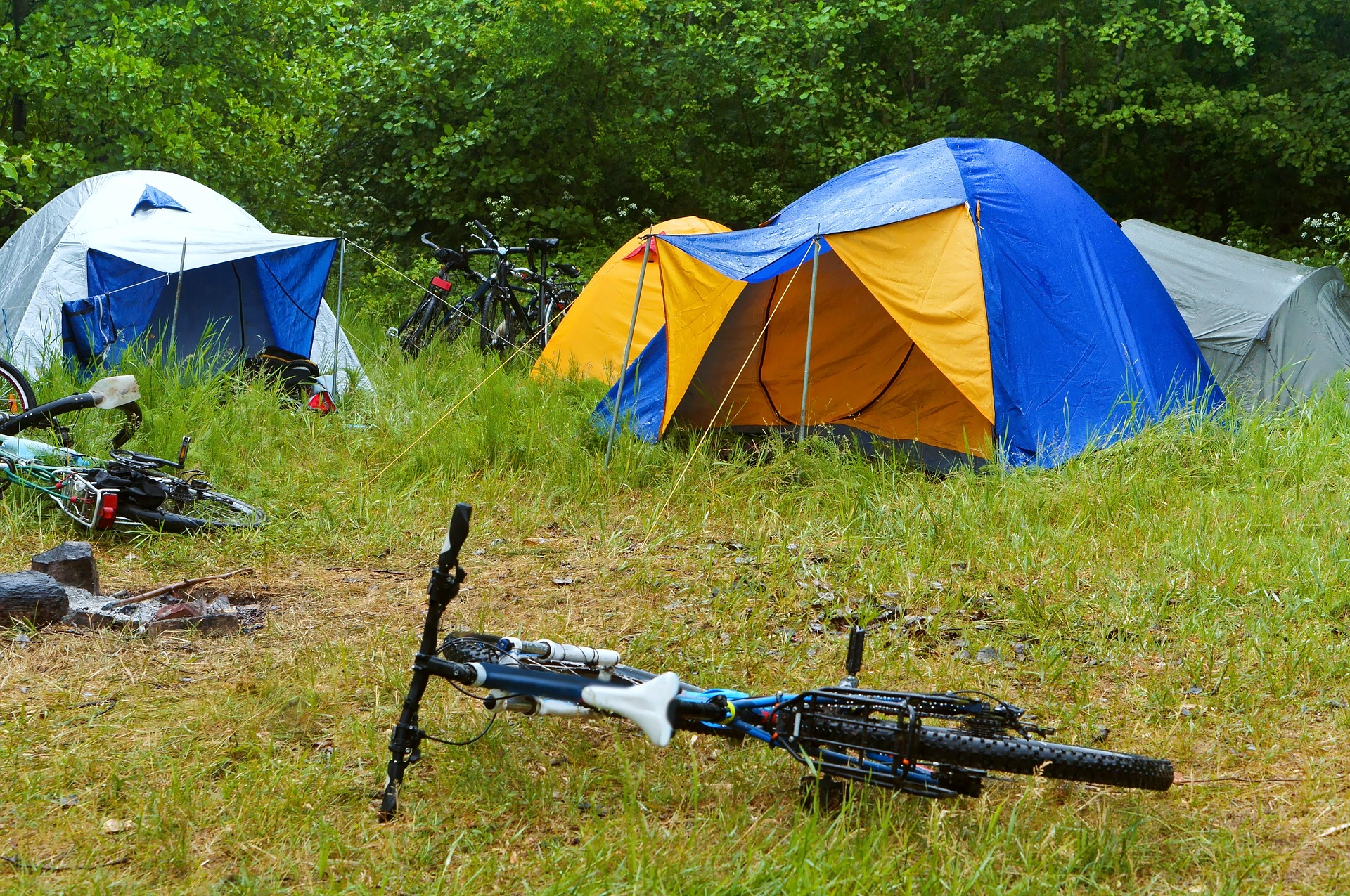
Choose sites that are visible enough to be found if you need help but not so exposed that you attract unwanted attention. Near a water source is convenient but not right next to it, where animal traffic is highest at dawn and dusk.
Avoid camping in washes, dry riverbeds, or low spots that could flood during a rainstorm. This is good practice with a group and essential when you are solo. You do not have a tent neighbor to wake you up if water starts rising.
In bear country, cook and store food at least 200 feet from where you sleep.
Hang your food or use a bear canister. Keep a clean camp with no food wrappers, toothpaste, or scented items near your tent. A bear visit is a solvable problem when you are awake and alert. It is a much bigger problem when you are asleep in a tent that smells like dinner.
Trust your instincts about a campsite. If something feels off, move on. There is always another spot. The mild inconvenience of riding another mile beats the uneasy feeling of spending the night somewhere that does not sit right.
Mechanical Preparedness
Solo riders need to be self-sufficient with bike repairs. At minimum, carry a spare tube (two if you are on tubeless and have had sealant failures before), a patch kit, tire levers, a multi-tool with all the hex sizes your bike uses, a chain breaker, a quick link for your chain, and a small pump or CO2 inflator.
Know how to use everything you carry. Practice fixing a flat, removing a wheel, and breaking and reconnecting a chain at home before your trip.
Fumbling through a repair you have never done while losing daylight on a remote trail is stressful and slow.
A derailleur hanger is the most common frame-specific part that breaks in a crash. Carry a spare. They weigh almost nothing and save you from being stranded with a bike that cannot shift. In a worst case, you can ride single-speed with a broken derailleur, but it limits your terrain options significantly.
Zip ties and electrical tape handle a surprising number of trailside repairs.
A cracked fender, a loose rack bolt, a dangling brake cable. Bring a small bundle of each.
Wildlife Awareness
Most wildlife encounters are harmless and over quickly. Animals generally want to avoid you as much as you want to avoid them. Making noise as you ride, especially around blind corners and in dense vegetation, gives animals time to move away before you arrive.
In bear country, carry bear spray and know how to deploy it quickly.
It should be on your handlebar, hip belt, or chest strap, not buried in a bag. Practice unholstering and flipping the safety off until the motion is automatic.
Snakes are a concern in warm climates. Watch where you step when walking your bike, and do not put your hands on rocks or logs without looking first. Most snakebites happen when people accidentally step on or reach near a snake they did not see.
Moose are more dangerous than bears in many areas.
They are large, unpredictable, and territorial, especially cows with calves in spring and bulls in rut during fall. If you see a moose on the trail, stop, give it space, and wait for it to move. Do not try to ride past it.
Physical Safety on the Road
Wear visible clothing and run lights, even during the day. Solo riders do not have the visibility advantage of a group. A blinking rear light on a rural highway makes drivers notice you sooner and give you more space.
Avoid riding after dark on roads if possible. If you must ride at night, use a bright front light and a flashing rear light with fresh batteries. Reflective tape on your bags and frame adds visibility without any weight penalty.
Carry basic first aid supplies.
Adhesive bandages, antiseptic wipes, gauze, medical tape, ibuprofen, and any personal medications you need. An elastic bandage wraps sprains and strains. A small roll of athletic tape handles blisters and skin tears. This is not a full medical kit, but it covers the most common issues that do not require professional help.
Mental Preparedness
Solo riding has lonely moments, especially on multi-day trips in remote areas.
This is normal and not a reason to turn around. The loneliness usually fades once you settle into the rhythm of the ride and start appreciating the solitude rather than resisting it.
Make conservative decisions. When you are tired, it is easy to push through one more climb or try one more technical section. Alone, the cost of a bad decision is higher. If you are unsure whether you can safely ride a section, walk it.
If you are too tired to focus, stop and camp. Pride does not fix broken bones.
Listen to your body and your gut. If something hurts, address it before it becomes a bigger problem. If a situation feels risky, it probably is. Solo riding rewards patience and caution far more than it rewards boldness.
Final Thoughts
Solo bikepacking is safe when you prepare properly and make thoughtful decisions on the trail.
The key ingredients are a solid communication plan, mechanical self-sufficiency, route awareness, and the discipline to choose the cautious option when you are unsure. Get those right, and solo riding becomes one of the best experiences the sport has to offer.